- Circular trip exploring the reefs and wrecks around the Sinai Peninsula
- Explore the most famous wreck in the Red Sea, the SS Thistlegorm
- Dive the Giannis D, Dunraven, Carnatic, Chrisoula K, Kimon, and more
- Spot dolphins among the wrecks of Abu Nuhas
- Log dives on Shark and Yolanda reefs in Ras Mohammed National Park
- Night dive included in the itinerary
Day 1:
Transfer to port and embark from 18:00 onwards. Welcome on board, cabin arrangement, and boat briefing. Permission work with the port authority, sailing very early the next morning.
Days 2-6:
Start with a check dive at nearby Temple or Ras Katy. Sail into the Gulf of Suez, passing Yolanda Reef, that is named after a 74-meter-long Cypriot freighter that struck the reef on the 1st of April 1980. The wreck lay partially submerged on the reef top until a storm caused it to drop. Most of the ship has finally fallen over the drop-off, leaving a huge scar in the slope between Shark and Yolanda Reef. Although a quantity of the cargo remains for the amusement of the divers: bathtubs, toilets, and bathroom fittings. Continue with the historical wrecks of Dunraven. Recovered in the early 1970s, the more than 125-year-old wreck is largely intact, totally covered in corals, and rich in marine life.
The most famous of the Red Sea wrecks may be even worldwide is the Thistlegorm. The wreck first gained fame when Jacques Cousteau dived it in 1956 but left the actual location a mystery until it was rediscovered in 1992. Lying upright on the seabed at 33 m, the 127 m long and 18 m wide wreck is absolutely impressive. Close to Shaab Ali in the early hours of 22 February 1881, the 78-meter-long Kingston ran aground at the northern edge of the reef that is known as Shag Rock.
Crossing the Gulf of Suez will take you to Abu Nuhas, a paradise for wreck lovers that is best known for the abundance of ancient and modern wrecks that lie here: Giannis D, Carnatic, Chrisoula K, and Kimon M. All are located on the northern side of the reef, a sandy seafloor at the bottom of a steep, sloping coral reef filled with table corals. The reef is very exposed to the prevailing wind and waves and was named after the oldest wreck, which was carrying copper (Nuhas in Arabic).
Sailing over to Gubal Island, you find the little wreck of the barge. During the day, the wide open wreck is covered in soft corals and fish life; at night, it is entirely different and becomes an outstanding site. If weather permits, you can dive the Ulysses or the Rosalie Moller. Only two days after the sinking of the Thistlegorm, Rosalie Moller was also lying at anchor when hit and went down upright. The location outside of Gubal Island is extremely exposed to the sea, wind, and waves. The dive is deep, bottom time is limited, and visibility is lower than elsewhere, so this dive is definitely only for very experienced divers.
In between wreck dives, you will also visit some outstanding reefs at Shaab Mahmoud and Ras Mohamed National Park.
* Dive sites in the area of Gubal Island may not be dived due to an order from the military. This affects the dive sites of Ulysses, Barge, Malak, and the Rosalie Moller. It is unknown how long the restriction will be in place.
Day 7:
Return to port; the last night will be spent at or close to port on board the liveaboard. Depending on the itinerary and/or administrative conditions, on weeklong safaris, the last night might be arranged in a hotel. This is usually communicated in advance.
Day 8:
Disembark by 12.00 at the latest and transfer to the airport or hotel.
Sample itineraries are for guidance only. Actual itineraries may differ slightly due to factors such as weather, wildlife, logistics, and local regulations.


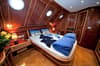
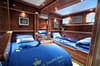
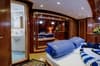
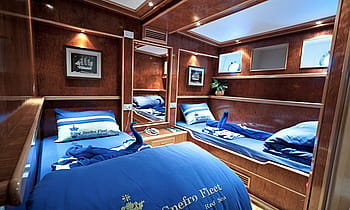
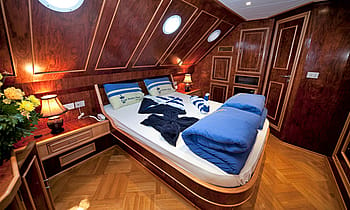
 Twin beds2 peopleShareable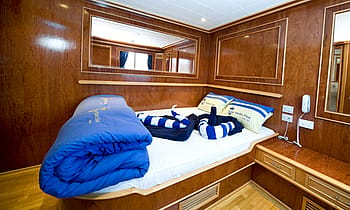
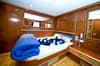
 Queen size bed2 peopleNon shareable